
Quick Answer
Cornell off-campus housing typically refers to privately owned apartments, houses, and rooms located near the Cornell University campus in Ithaca, NY. Students usually lease directly from private landlords or property management companies, often in Collegetown or adjacent neighborhoods, with lease terms running August to July to align with the academic year.
Finding a place to live off campus sounds straightforward until you’re doing it for the first time from three states away, on a deadline, with roommates who all have different opinions about what ‘close enough to campus’ means.
The Ithaca rental market moves fast. Landlords near Cornell start showing units for the following academic year as early as October, and by February, the better-located, better-maintained places are gone. Students who wait until April are typically left with whatever didn’t rent in fall.
That’s why understanding how Cornell off-campus housing actually works, before you start touring, saves you from making a lease decision you’ll regret by November.
How the Ithaca Rental Market Differs from Other College Towns
Ithaca is not a typical college town rental market. Cornell draws students from 92 countries. The law school, the medical school, and graduate programs in engineering, architecture, and business all run on different timelines. The result is a market that doesn’t fully reset every May like most undergraduate-heavy towns.
Lease Terms Are Structured Around the Academic Year
Standard leases near Cornell run August 1 to July 31. That 12-month structure is intentional. It covers the full academic calendar, including summers when grad students often need to stay. Students who want a 9-month or 10-month lease will find those rare and usually more expensive per month because the landlord absorbs the gap.
Furnished vs. Unfurnished Is a Bigger Deal Than It Sounds
Moving furniture to Ithaca from Boston or Seoul is not cheap. International students and grad students arriving for just two years tend to prioritize fully furnished units specifically because they don’t want to deal with acquiring and then offloading a couch. Undergraduate groups signing their first lease sometimes overlook furnishing costs until they’re pricing out a 6-bedroom house and realize the furniture bill rivals the security deposit.
What the Collegetown and Adjacent Neighborhoods Actually Offer
Cornell off-campus housing clusters in a few distinct zones. Each one has tradeoffs worth knowing about before you tour.
Collegetown: Close, Loud, High Demand
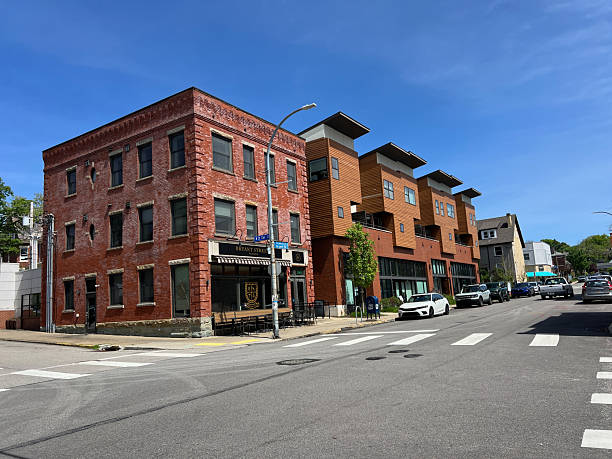
The Collegetown neighborhood sits directly southeast of central campus. It’s a 5 to 15 minute walk to Olin Library or Statler Hall depending on where you are. The upside is obvious. The downside: it’s also where most of the undergraduate social activity is concentrated, which means street noise on weekend nights, higher per-room prices, and landlords who know they have leverage because the location sells itself.
West of Collegetown: Quieter Streets, Still Walkable
Streets like Ferris Place, State Street west, and the blocks running north toward Cayuga Heights offer a different feel. You’re still 10 to 20 minutes from the engineering quad on foot, but the neighborhood is quieter, parking is less of a battle, and the housing stock tends toward larger multi-bedroom houses rather than cramped apartments. Grad students and law students disproportionately end up in this zone. That pattern isn’t accidental.
The Questions Most Students Forget to Ask Before Signing
The lease matters, but the things that affect daily life usually aren’t in it. Here’s what worth flagging before you commit.
Who handles maintenance and how fast? Some landlords near Cornell respond within 24 hours. Others take three weeks to replace a broken window. The testimonials from past tenants are your best data point here.
What’s included in rent? Heat, water, and electric arrangements vary widely. A $900 per person unit that includes utilities can be cheaper month-to-month than an $800 unit where you’re splitting a $400 gas bill through an Ithaca winter.
What’s the parking situation? If any roommate has a car, this question needs an answer before signing. Street parking near Cornell is permit-controlled. Off-street parking adds cost but eliminates a recurring headache.
Is the unit actually ready? Photos and descriptions don’t always match the unit you tour, and the unit you tour isn’t always the one that will be ready in August. Ask to see the specific unit, or get written confirmation of its condition.
Timing: When to Start and What Happens If You Wait
October is the right time to start looking if you want your pick of available units for the following year. November and December are still good. By February, you’re looking at what’s left. By April, you’re looking at what no one else wanted, and the Ithaca winter has made it impossible to properly evaluate a roof or a drafty window.
The lease signing pressure near Cornell is real. Landlords know the cycle. Some push students to sign within 24 to 48 hours of showing a unit. That pressure is a signal to read the lease carefully, not to skip reading it.
Frequently Asked Questions
What is Cornell off-campus housing?
Cornell off-campus housing is privately owned student housing located near Cornell University in Ithaca, NY. It includes apartments, rooms in houses, and furnished units leased directly from landlords, outside of university-managed dormitories and program housing.
How far from campus can off-campus housing be in Ithaca?
Most students look within a 10 to 25 minute walk of central campus or the relevant school building. The Collegetown area is closest. Neighborhoods just west of Collegetown, including streets like Ferris Place and State Street, offer a slightly longer walk but a quieter living environment.
What is the difference between Cornell dorms and off-campus housing?
Cornell dormitories are managed by the university and typically used by first-year undergraduates. Off-campus housing is leased privately, usually in groups, and offers more space, more autonomy, and no meal plan requirement. Most upper-year Cornell students live off campus.
Who rents off-campus housing near Cornell?
Undergraduate students typically move off campus after their first or second year. Graduate students, law students, and visiting researchers also make up a significant portion of the off-campus rental market in Ithaca, and many prefer furnished units with longer lease terms.
How do I choose an off-campus landlord near Cornell?
Look for landlords with documented tenant feedback, clear lease terms, and responsive maintenance. Ask past or current tenants directly about the experience. Small-scale landlords who manage their own properties often provide faster repair responses than larger management companies handling dozens of units.